
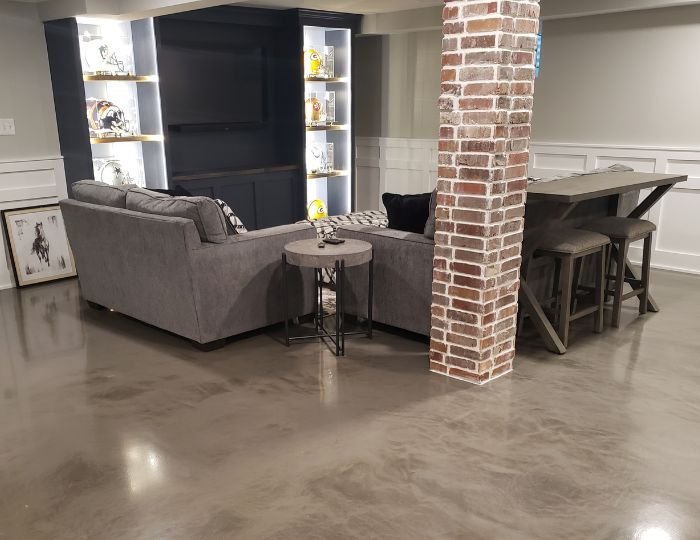
A concrete cellar floor is a practical foundation for basements, wine cellars, storage rooms, utility spaces, and other below-ground areas. Concrete is widely used because it provides a durable surface, supports heavy loads, and can be finished in several ways to suit different purposes. However, cellars often face unique challenges, including ground moisture, condensation, temperature changes, and limited ventilation. Choosing the right concrete flooring solution requires more than simply pouring a slab or applying a coat of paint.
Whether you are building a new cellar, renovating an older property, or improving an existing concrete surface, understanding your flooring options can help you create a space that remains functional and easier to maintain. Proper drainage, moisture management, surface preparation, and the selection of suitable finishes all influence how well a cellar floor performs over time.
This guide explains the benefits of concrete cellar floors, common problems, suitable finishes, installation methods, maintenance requirements, and important considerations for choosing the right solution.
What Is a Concrete Cellar Floor?
A concrete cellar floor is a floor surface made from concrete or a concrete-based slab installed in a cellar or below-ground room. It may be left unfinished, sealed to reduce surface dust, coated with a protective product, or covered with another flooring material.
Concrete is suitable for cellars because it can provide a solid, stable surface that tolerates everyday use. Depending on its design and construction, it may support shelving, storage equipment, utility appliances, and other heavy items.
However, a concrete floor does not automatically prevent moisture from entering a cellar. Water vapor and groundwater can move through or around concrete if the structure lacks suitable moisture-control measures. Cracks, construction joints, and gaps around the perimeter may also allow water to enter.
For this reason, a successful concrete cellar floor should be designed around the conditions of the building. An older cellar with persistent dampness may require a different approach from a newly constructed cellar with appropriate drainage and a moisture-control system.
Benefits of a Concrete Cellar Floor
Concrete offers several advantages that make it a popular flooring choice for below-ground spaces. Its performance depends on the quality of construction, the condition of the surrounding building, and the finish applied to the surface.
Durability and Strength
A properly designed and installed concrete slab can provide a durable base for many types of cellar use. It can tolerate regular foot traffic and support storage shelves, workbenches, and equipment when the slab and supporting structure are designed for the expected loads.
Concrete is also resistant to many forms of everyday wear. Unlike some softer flooring materials, it does not tear or become damaged simply because heavy objects are placed on it.
However, concrete can crack, chip, or deteriorate under certain conditions. Settlement, inadequate support, excessive loads, shrinkage, and moisture-related problems can affect its performance. A damaged slab should be assessed before a new coating or floor covering is installed.
Low Maintenance
An appropriately finished concrete cellar floor can be relatively easy to maintain. Routine cleaning may involve sweeping, vacuuming, or damp mopping, depending on the selected finish.
Sealed concrete can help reduce dust from the surface and make cleaning easier. Coated floors may also resist certain stains, although their performance depends on the coating material and its compatibility with the cellar environment.
Maintenance is generally straightforward, but it should not replace moisture management. Persistent water, recurring damp patches, or new cracks may indicate a problem that needs investigation.
Versatile Appearance
Concrete does not have to look plain or industrial. It can be polished, stained, painted, or coated to create different appearances.
A natural concrete finish may suit a traditional cellar or utility room, while a smooth, light-colored coating can create a brighter appearance. Decorative concrete finishes may also work in wine cellars, hobby rooms, and converted basement spaces.
The most suitable finish depends on how the cellar will be used. A storage room may benefit from a simple, easy-to-clean surface, while a finished living space may require a more decorative approach.
Suitable for Different Cellar Uses
Concrete floors can be used in many types of below-ground rooms, including:
- Wine cellars and beverage storage areas.
- Household storage rooms.
- Utility and laundry spaces.
- Workshops and hobby rooms.
- Equipment and service rooms.
- Certain converted basement spaces.
Each use has different requirements. A wine cellar, for example, may need carefully controlled temperature and humidity, while a utility room may require a finish that tolerates frequent cleaning. Selecting the floor according to its intended use helps avoid unnecessary repairs.
Common Problems With Concrete Cellar Floors
Cellars are often more exposed to moisture-related challenges than rooms above ground. Understanding these issues is essential before choosing a finish.
Dampness and Moisture
Moisture is one of the most common concerns with concrete cellar floors. Groundwater, water vapor, leaks, and condensation can all contribute to a damp surface.
Concrete is porous, meaning water vapor can move through it under certain conditions. If moisture is trapped beneath an impermeable coating, the coating may blister, peel, or lose adhesion.
Signs of moisture problems can include dark patches, persistent dampness, white mineral deposits, musty odors, and coating failure. These symptoms do not always have the same cause, so identifying the source is important.
Before sealing or painting the floor, assess the cellar for leaks, poor drainage, groundwater pressure, and condensation. A surface coating alone may not resolve the underlying problem.
Cracks in the Concrete
Small cracks can occur as concrete cures and shrinks. Other cracks may develop because of settlement, structural movement, or inadequate support.
Not every crack indicates a serious structural problem, but wide, growing, displaced, or water-leaking cracks should be assessed by a qualified professional.
Filling cracks without understanding their cause may provide only a temporary repair. If movement continues, the crack may reopen and damage the new floor finish.
Condensation
Cellars can experience condensation when warm, humid air comes into contact with cooler surfaces. Even if groundwater is not entering the building, moisture may accumulate on the floor, walls, pipes, or stored items.
Poor ventilation and temperature differences can make condensation more noticeable. Improving ventilation or humidity control may help, but the correct solution depends on the building’s climate and construction.
Before installing a floor coating, determine whether the moisture is coming from the ground or forming on the surface due to condensation. These problems may require different treatments.
Uneven Surfaces
An older concrete cellar floor may contain dips, raised sections, rough patches, or previous repair areas. Unevenness can affect the appearance and performance of a new finish.
Some coatings can tolerate minor surface variations, while others require a smooth, level base. Floor coverings may also have specific flatness requirements.
Before installation, identify uneven areas and select a repair or leveling method compatible with the existing concrete and moisture conditions.
Best Finishes for a Concrete Cellar Floor
The right finish depends on the cellar’s moisture conditions, intended use, budget, and desired appearance. Not every product is suitable for below-ground concrete.
Unfinished Concrete
Leaving the concrete exposed is one of the simplest options. This may be appropriate for utility cellars, basic storage areas, or spaces where appearance is less important than function.
An unfinished floor avoids the expense of a decorative coating, but it may produce dust and can be harder to clean thoroughly. Unsealed concrete may also absorb spills and develop stains.
Before leaving the slab exposed, make sure it is structurally sound and does not have an unresolved moisture problem. A bare floor is not automatically a suitable solution for a persistently damp cellar.
Sealed Concrete
A suitable concrete sealer can reduce surface dust and make routine cleaning easier. Some sealers also improve resistance to staining, depending on their formulation.
However, sealers vary considerably. Some are designed primarily to protect the surface, while others have specific requirements concerning moisture vapor transmission. A product suitable for an above-ground garage may not be appropriate for a damp cellar.
Check the manufacturer’s technical information and confirm compatibility with below-ground conditions before application. The slab may need moisture testing and careful surface preparation.
Epoxy Floor Coating
Epoxy coatings can create a smooth, durable surface that is easier to clean than rough concrete. They are available in a range of colors and can be useful in workshops, utility rooms, and selected storage spaces.
The main consideration is moisture compatibility. Excessive moisture vapor coming through the slab can cause certain epoxy systems to blister or detach. Some products are designed for particular moisture conditions, but their limits must be verified.
Epoxy generally requires a well-prepared surface, and the installation may involve grinding, repairs, and specific curing conditions. If the cellar is damp, investigate the moisture source before applying an impermeable coating.
Concrete Floor Paint
Concrete floor paint can provide a simple decorative finish and may be less expensive than some specialist coating systems. It is available in different colors and can brighten a dark cellar.
However, ordinary paint may not withstand heavy traffic, abrasion, or moisture pressure as well as a purpose-designed floor coating. Using a product intended for walls or dry above-ground floors can lead to premature peeling.
Choose a floor coating specifically approved for the concrete condition and intended use. Prepare the surface according to the product instructions and allow the required curing time before placing items on the floor.
Polished Concrete
Polished concrete is mechanically ground and refined to create a smoother, more decorative surface. Depending on the process, it can have a subtle sheen and a contemporary appearance.
Polished concrete may be suitable for certain finished basement or cellar spaces, but it is not a universal solution for damp conditions. The existing slab must be suitable for polishing, and moisture-related problems should be addressed separately.
The process can also be more expensive than leaving the floor unfinished or applying a simple sealer. A specialist assessment can help determine whether the slab is a good candidate.
Tile or Other Floor Coverings
In some cellars, tiles or other flooring materials may be installed over a concrete base. This can improve appearance and create a surface suited to a particular use.
However, the chosen material and installation system must be compatible with the moisture conditions. Trapping moisture beneath a covering can lead to adhesive failure, odors, or damage to certain materials.
Avoid installing moisture-sensitive coverings over a damp slab without an appropriate assessment and moisture-control plan. The suitability of the subfloor matters as much as the appearance of the final flooring.
Concrete Cellar Floor Finish Comparison
| Floor Finish | Main Advantage | Main Consideration | Suitable Uses |
|---|---|---|---|
| Unfinished concrete | Simple and economical | Can produce dust and absorb stains | Basic storage and utility areas |
| Concrete sealer | Helps control surface dust | Must suit the slab’s moisture conditions | Storage rooms and service spaces |
| Epoxy coating | Smooth and easy to clean | Moisture can affect adhesion | Workshops and selected utility rooms |
| Concrete floor paint | Adds color at a relatively accessible cost | Durability varies by product | Light-use cellars |
| Polished concrete | Decorative, refined appearance | Requires a suitable slab and specialist work | Finished cellar interiors |
| Tile flooring | Broad design choices | Installation system must tolerate moisture | Suitable finished spaces |
The best choice depends on the condition of the concrete, moisture exposure, cleaning needs, and installation requirements. No finish should be assumed to solve an underlying groundwater or dampness problem.
How to Prepare a Concrete Cellar Floor
Good preparation is essential for a durable result. Applying a new finish over dirty, damaged, or damp concrete can lead to poor adhesion and premature failure.
Step 1: Inspect the floor. Look for cracks, loose concrete, flaking coatings, uneven areas, damp patches, and white mineral deposits. Record any areas where water appears after rain or changes in groundwater conditions.
Step 2: Identify moisture sources. Check for plumbing leaks, poor drainage, water entering through the walls, groundwater seepage, and condensation. Persistent moisture should be investigated before the finish is selected.
Step 3: Clean the surface. Remove dust, loose debris, grease, and incompatible coatings. The required cleaning method depends on the condition of the concrete and the product being installed.
Step 4: Repair suitable defects. Stable cracks and minor surface damage may be repaired with compatible materials. Structural cracks, continuing movement, and water-bearing cracks require further assessment before cosmetic repairs.
Step 5: Test the concrete where required. Coatings and adhesives may have strict moisture limits. Use the testing method specified by the manufacturer or recommended by a flooring professional.
Step 6: Choose the correct system. Select a sealer, coating, or floor covering intended for the actual conditions. Confirm compatibility with the existing concrete, any repair materials, and the expected moisture exposure.
Step 7: Allow adequate curing. Follow the product’s instructions for application temperature, ventilation, drying, and curing. Do not assume that a surface is ready for use simply because it feels dry.
How to Manage Moisture Beneath a Concrete Cellar Floor
Moisture control is one of the most important aspects of cellar flooring. The right solution depends on whether the problem involves groundwater, water vapor, surface condensation, or a direct leak.
Start by checking the building’s drainage and external water management. Blocked drains, leaking pipes, damaged gutters, or poor ground grading can contribute to water entering a cellar.
If groundwater is affecting the floor, a more comprehensive solution may be necessary. Depending on the building, this could involve drainage improvements, a suitable waterproofing system, a designed subfloor membrane, or professional repairs. The correct approach depends on the construction and the source of the water.
A damp-proof or vapor-control membrane may be part of a properly designed floor assembly, particularly in new construction or major renovation. Its placement and compatibility with the slab and surrounding walls matter. Simply laying an arbitrary plastic sheet or applying a surface coating may not address all moisture paths.
Condensation may require different measures, such as managing humidity, improving appropriate ventilation, and addressing cold surfaces. In some climates, ventilation strategies must be chosen carefully because bringing in warm, humid air can increase condensation on cool cellar surfaces.
If water repeatedly enters the cellar, or if the floor shows signs of significant deterioration, consult a qualified building or waterproofing professional before spending money on a decorative finish.
How Much Does a Concrete Cellar Floor Cost?
The cost of a concrete cellar floor depends on the existing slab, the amount of preparation required, the chosen finish, labor rates, and the size of the space.
An unfinished concrete floor may require relatively little additional work if the slab is sound. Sealing or painting can increase the cost, while epoxy coatings and polished concrete often require more extensive preparation or specialist equipment.
Additional expenses may include:
- Removing old coatings or flooring.
- Repairing cracks and damaged concrete.
- Leveling uneven areas.
- Testing and treating moisture problems.
- Installing a suitable membrane or drainage system.
- Applying primers, sealers, or specialist coatings.
- Hiring professional installers.
Moisture remediation can be a significant part of the budget, especially in older cellars. It is usually better to identify and address the cause before applying an expensive finish that may fail.
When comparing quotes, ask for a breakdown of surface preparation, repairs, materials, labor, and any moisture-control work. Check whether the price includes the required curing time and any follow-up treatment.
Maintaining a Concrete Cellar Floor
Regular maintenance can help extend the useful life of a concrete cellar floor and keep the space clean.
Sweep or vacuum the floor to remove dust, grit, and debris. Clean spills promptly, especially if the cellar stores wine, household supplies, tools, or materials that may stain the surface.
Use cleaning products appropriate for the installed finish. Some coatings can be damaged by abrasive cleaners or strong chemicals, while other surfaces tolerate a wider range of cleaning methods.
Inspect the floor periodically for new cracks, peeling coatings, white mineral deposits, and damp areas. These signs may indicate a change in moisture conditions or deterioration that needs attention.
Avoid placing moisture-sensitive boxes, textiles, or stored goods directly on a persistently damp floor. Shelving or suitable raised storage can help protect belongings, but it does not replace repairs to the building.
If the floor has a protective coating, follow the manufacturer’s maintenance instructions and recoat it when necessary. Before applying a new finish, confirm that the existing surface is compatible with the proposed product.
Common Mistakes to Avoid
One common mistake is painting or sealing a damp concrete cellar floor without identifying the source of moisture. Even a high-quality coating can fail if the slab conditions exceed its limits.
Another mistake is treating every crack as a cosmetic defect. Some cracks are harmless shrinkage cracks, while others may indicate settlement or ongoing movement. Assess the condition before filling or covering them.
Using the wrong product can also cause problems. Standard wall paint, unsuitable adhesives, or coatings intended for dry locations may not perform well in below-ground environments.
Poor surface preparation is another frequent cause of failure. Dust, oil, loose coatings, and incompatible repair materials can prevent a new coating from bonding properly.
Finally, do not confuse a waterproof surface finish with complete cellar waterproofing. A coating may resist spills while still allowing moisture to enter through joints, walls, cracks, or other parts of the building.
Frequently Asked Questions About Concrete Cellar Floors
What is the best finish for a concrete cellar floor?
The best finish depends on moisture conditions and how the cellar will be used. A suitable sealer may be enough for a basic storage room, while a compatible epoxy system can provide a more refined surface in some utility spaces. Damp cellars should be assessed before any finish is applied.
Should a concrete cellar floor be sealed?
Sealing can help reduce dust and make cleaning easier, but not every concrete floor needs the same treatment. Choose a product designed for the slab’s condition and intended use. If moisture is moving through the concrete, confirm that the sealer is appropriate before applying it.
Why is my concrete cellar floor damp?
Possible causes include groundwater seepage, water entering through cracks, plumbing leaks, inadequate drainage, and condensation. The correct solution depends on the source. Persistent dampness should be investigated rather than covered with paint or another finish.
Can I paint an old concrete cellar floor?
Yes, if the concrete is sound, properly prepared, and within the moisture limits of the selected floor paint. Remove incompatible coatings and address active moisture problems first. Use a product specifically designed for concrete floors and the conditions in the cellar.
Is epoxy flooring suitable for a cellar?
Epoxy can be suitable when the concrete is adequately prepared and the selected system is compatible with the slab’s moisture conditions. Excessive moisture vapor can cause some coatings to blister or detach. Follow the manufacturer’s testing and preparation requirements.
How can I reduce dust from a concrete cellar floor?
Regular cleaning and a suitable concrete sealer can help reduce surface dust. The concrete should first be checked for deterioration and moisture-related damage. Select a treatment compatible with the slab and the intended use of the room.
Can I install vinyl flooring over a concrete cellar floor?
Vinyl flooring may be suitable over concrete when the subfloor meets the product’s flatness and moisture requirements. A suitable moisture-control system may be necessary, depending on the building and product. Check the manufacturer’s instructions before installation.
Conclusion
A concrete cellar floor can provide a durable, practical foundation for storage, utility use, workshops, and finished below-ground rooms. Its long-term performance depends on the condition of the concrete, the quality of preparation, and the suitability of the chosen finish.
Unfinished concrete, sealers, floor paint, epoxy coatings, polished concrete, and other floor coverings each offer different benefits. The right option depends on appearance, maintenance needs, budget, and moisture exposure.
Before renovating an existing cellar floor, inspect the slab, identify any dampness or structural concerns, and confirm that the selected flooring system is appropriate for below-ground conditions. Addressing moisture problems before applying a finish can help prevent costly failures and create a floor that remains functional and easier to maintain for years to come.
| Read More : Vinyl Plank Layout Patterns: |
3 Comments
[…] Read more:Concrete Cellar Floor: Best […]
[…] Read more: Concrete Cellar Floor: Best […]
[…] Read More : Concrete Cellar Floor: Best […]