
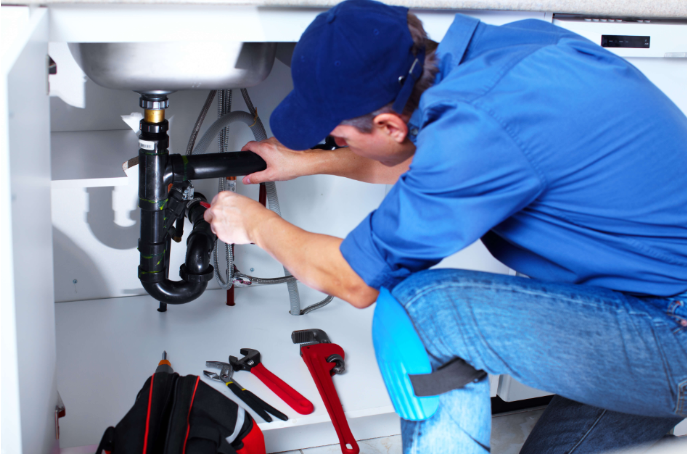
There is a pattern that plays out in houses everywhere, and it is remarkably consistent. A homeowner notices something slightly off — a gurgling drain, a faint smell near the boiler cupboard, a water bill that crept up without any clear explanation. They file it away mentally, decide it is probably nothing, and move on. Weeks pass, then months. Then a ceiling comes down, or a wall gets opened up to reveal pipework that has been weeping into insulation for a very long time. This is not bad luck. It is what happens when early signals go unread, and it is precisely where residential plumbers earn their reputation.
Smell Is a Diagnostic Tool
Most plumbing problems make themselves known through smell before they ever become visible. A faint sulphurous odour near a drain that clears quickly usually points to a dry trap — a straightforward fix. That same smell lingering, or getting noticeably worse in warm weather, suggests organic matter breaking down somewhere further into the drainage line. Sewage odour inside a house with no obvious source is more concerning still. It can mean a cracked drain running beneath the floor slab, allowing gases to push upward through concrete. That is not a blockage to clear. It is a structural drainage failure, and leaving it does not make it smaller.
What Corroding Pipes Actually Do
Galvanised steel pipework corrodes from the inside out, which is what makes it so easy to underestimate. The outer surface looks completely intact whilst the bore narrows steadily as rust builds up along the interior walls. Flow gets restricted. Particulate matter sheds into the water supply. Residents often notice it first as a brownish discolouration when running a tap after the house has sat empty for a few days, or as puzzlingly low pressure in a home where the incoming supply is perfectly adequate. Replacing corroded sections one at a time tends to shift the problem rather than fix it — the next weakest section simply becomes the next thing to fail.
The Risk Hidden in Older Homes
Houses built before lead pipework was formally phased out sometimes still carry original supply lines in sections nobody ever prioritised for replacement. The short underground run between the street main and the internal stopcock is the most common culprit — out of sight, never causing obvious symptoms, and surviving long after everything else was updated. Residential plumbers working in older properties identify this regularly, but many homeowners have simply never had a professional look at the full system and have no idea that section exists. Lead in drinking water accumulates rather than passing through, and the effects are not always immediately traceable back to the source.
High Pressure Does Quiet Damage
Mains water pressure varies considerably between areas, sometimes between streets on the same network. Where it runs consistently high, the effects build across every component connected to the supply. Flexible hoses behind washing machines and dishwashers are built to handle pressure within a specific range. When that range gets exceeded repeatedly over time, the internal braiding fatigues. These hoses do not develop slow leaks as a warning — they fail completely and suddenly, usually when the house is empty. Residential plumbers fit pressure-reducing valves that prevent this entirely, but most homeowners only learn they need one after the flood has already happened.
Drainage Systems Get Mixed Up
Surface water drainage and foul drainage operate on the same basic principle but must never be connected to each other. In older properties where extensions or outbuildings have been added over the years, the two systems sometimes get joined incorrectly by previous owners who did not fully understand the distinction. During heavy rainfall, surface water then enters the foul sewer in volume, overwhelming the system. The result is internal flooding through the lowest outlet in the property — typically a ground floor toilet or shower tray — which is as unpleasant as it sounds and entirely preventable.
Conclusion
Plumbing failures are rarely random events. They follow patterns, leave early signs, and almost always get worse in direct proportion to how long they go unaddressed. Residential plumbers bring something beyond technical skill — they bring the kind of informed pattern recognition that turns a vague symptom into an accurate diagnosis before the damage becomes genuinely structural. The homes that hold up well over the long term are not necessarily the ones with the newest fittings. They are the ones where someone looked at the whole system properly and dealt honestly with what they actually found.