
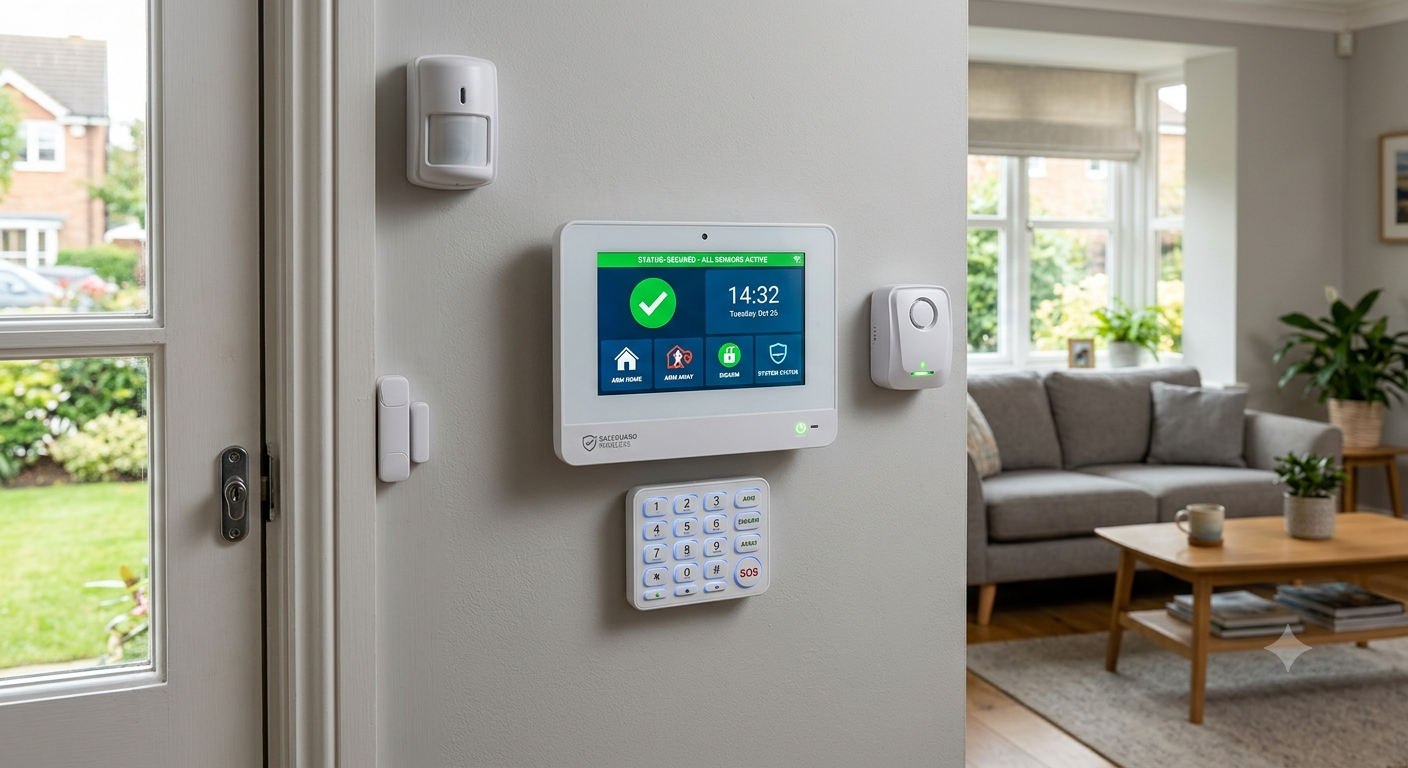
A wireless home security alarm system is one of the most effective ways to protect your home from burglaries, break-ins, and other security threats. Unlike traditional wired systems, wireless alarms use WiFi, cellular networks, or radio signals to connect sensors, cameras, and control panels, making installation faster and more flexible.
Modern wireless alarm systems offer real-time alerts, smartphone control, smart home integration, and 24/7 monitoring options. Whether you live in a house, apartment, or rental property, a wireless security system provides reliable protection without extensive wiring.
Benefits of a Wireless Home Security Alarm System
Wireless alarm systems have become increasingly popular because they are easy to install and highly customizable.
Key benefits include:
- Quick DIY installation without drilling extensive holes
- Real-time alerts sent directly to your smartphone
- Easy expansion with additional sensors and cameras
- Remote monitoring from anywhere
- Battery backup during power outages
- Smart home integration with compatible devices
- Reduced maintenance compared to wired systems
- Portable design for homeowners who move frequently
These advantages make wireless systems an excellent choice for both small and large homes.
Main Components of a Wireless Alarm System
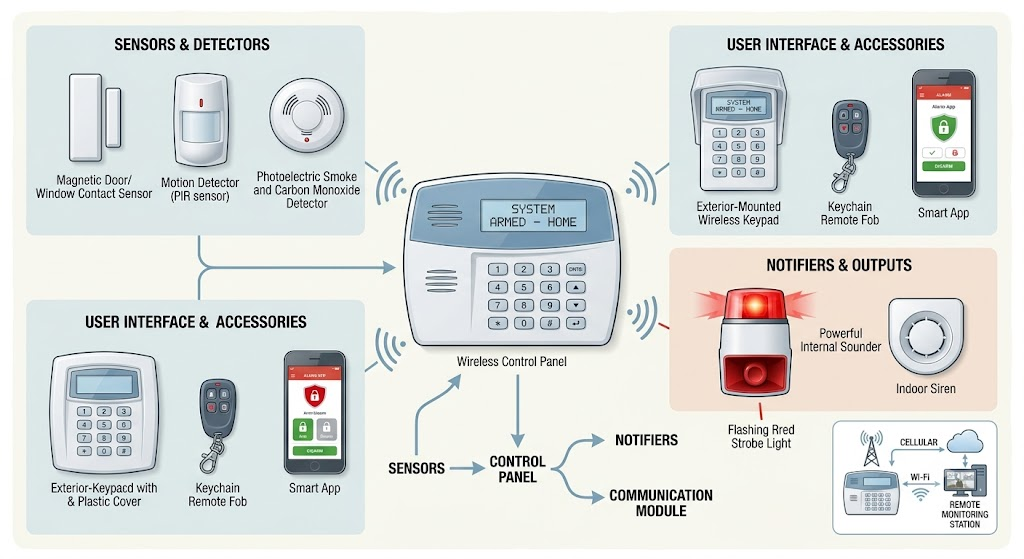
A complete wireless home security alarm system consists of several devices working together to protect your property.
Control Panel
The control panel acts as the central hub of the security system. It communicates with all connected devices and allows you to arm or disarm the system.
Door and Window Sensors
These sensors detect when doors or windows are opened while the alarm is armed. They are among the most important components for preventing unauthorized entry.
Motion Sensors
Motion detectors monitor movement inside your home. Advanced models can distinguish between people and pets to reduce false alarms.
Security Cameras
Indoor and outdoor cameras provide live video, motion recording, and remote viewing through a mobile app.
Siren
A loud built-in or external siren activates when an intrusion is detected, helping scare away intruders and alert nearby neighbors.
Keypad or Mobile App
Most modern systems allow users to control the alarm through a keypad, smartphone app, or both, making security management simple and convenient.
Essential Features to Look For
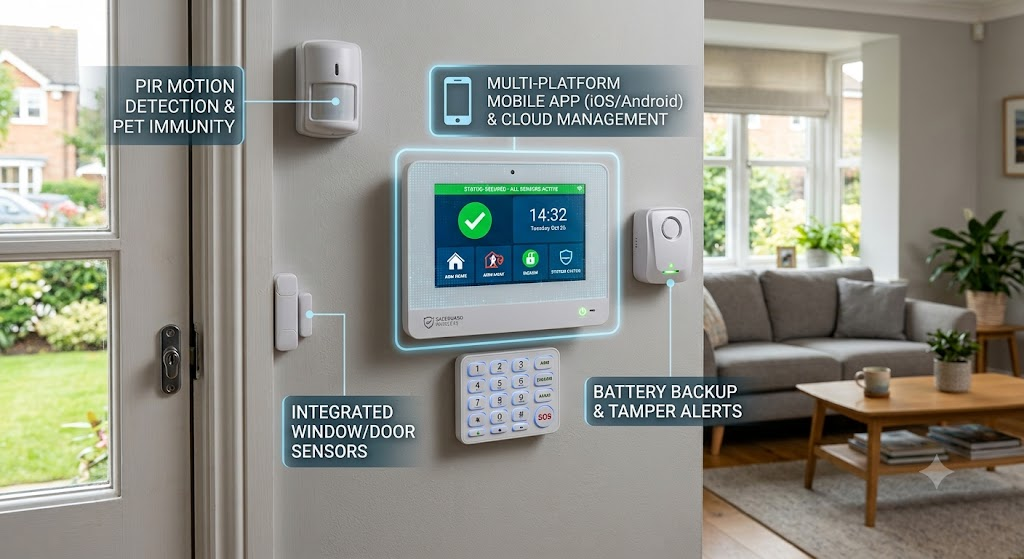
Before purchasing a wireless home security alarm system, compare these important features.
Smartphone Control
Choose a system that lets you arm, disarm, and monitor your home remotely using a dedicated mobile application.
Instant Notifications
Push notifications and SMS alerts inform you immediately when motion is detected or a sensor is triggered.
Cellular Backup
A cellular backup connection keeps your alarm system operational even if your WiFi or internet service becomes unavailable.
Battery Backup
Backup batteries ensure the system continues protecting your home during power outages.
Smart Home Compatibility
Many wireless alarm systems integrate with smart lighting, smart locks, voice assistants, and other connected devices to create a complete home automation system.
Expandable Design
An expandable system allows you to add extra cameras, motion detectors, smoke detectors, water leak sensors, and additional door or window sensors as your security needs grow.
Wireless vs. Wired Alarm Systems
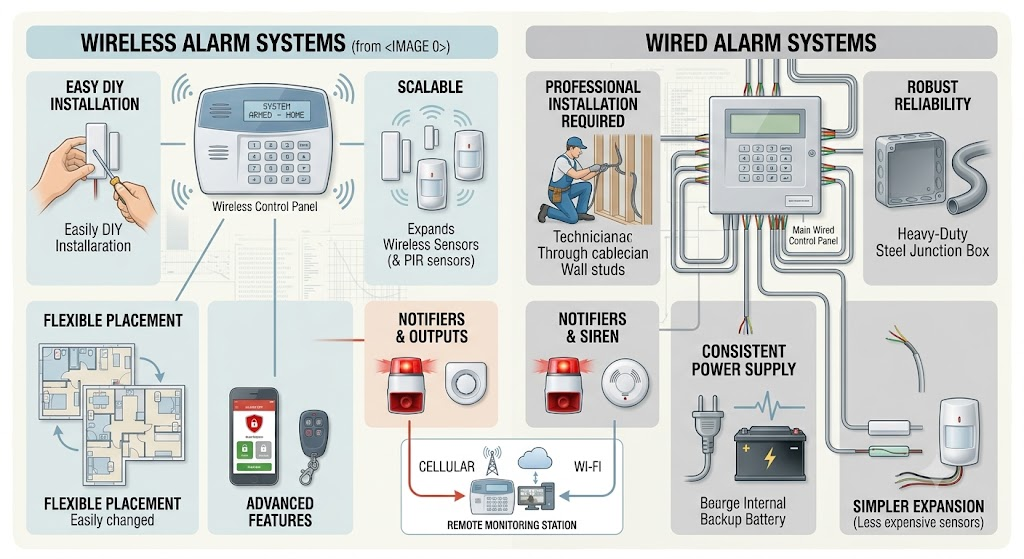
Both options offer reliable protection, but they differ in installation and maintenance.
Wireless Alarm Systems
Advantages:
- Easy DIY installation
- Flexible placement
- Minimal wiring
- Quick setup
- Easy to expand
- Ideal for renters and homeowners
Disadvantages:
- Depend on batteries for many sensors
- Wireless signal quality can affect performance
Wired Alarm Systems
Advantages:
- Stable communication
- Continuous power supply
- Suitable for new home construction
- Lower ongoing battery maintenance
Disadvantages:
- Professional installation often required
- More difficult to relocate
- Higher installation costs
For most homeowners, wireless systems provide the best balance of convenience, security, and affordability.
Where to Install Wireless Security Sensors
Proper placement ensures maximum protection.
Install sensors at:
- Front door
- Back door
- Garage entrance
- Sliding glass doors
- Ground-floor windows
- Basement entrances
- Hallways
- Staircases
Motion detectors should cover major walkways without pointing directly at heating vents, windows, or areas with frequent pet activity.
Tips for Improving Alarm System Security
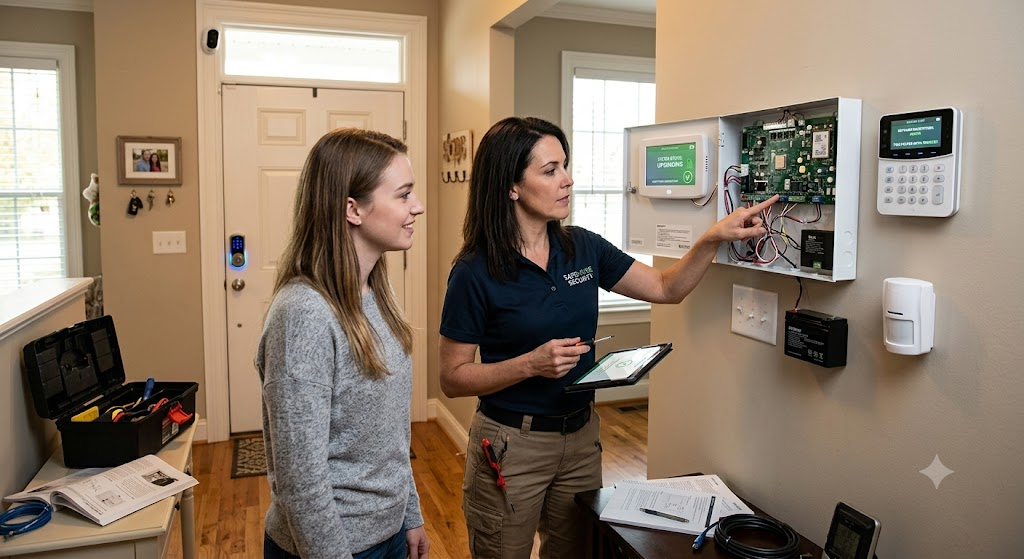
Even the best alarm system should be configured properly for maximum protection.
Follow these best practices:
- Use a strong, unique administrator password.
- Enable two-factor authentication for your security account.
- Update firmware regularly.
- Secure your home WiFi with WPA3 or WPA2-AES encryption.
- Test all sensors monthly.
- Replace batteries before they become depleted.
- Keep emergency contacts up to date.
- Regularly review system activity logs.
Routine maintenance helps ensure your alarm system performs reliably when you need it most.
Frequently Asked Questions
Are wireless home security alarm systems reliable?
Yes. Modern wireless alarm systems are highly reliable when installed correctly and maintained with updated firmware, strong passwords, and healthy batteries.
Do wireless alarm systems work during a power outage?
Most systems include battery backup, allowing them to continue operating even if household power is interrupted.
Can I install a wireless alarm system myself?
Yes. Most wireless systems are designed for DIY installation with step-by-step instructions and mobile app guidance, eliminating the need for professional wiring.
Do wireless alarm systems require a monthly subscription?
Not always. Many systems offer self-monitoring with free mobile alerts, while others provide optional professional monitoring services for an additional monthly fee.
Conclusion
A wireless home security alarm system offers an effective and convenient way to protect your home, family, and belongings. With features such as smart sensors, instant notifications, mobile app control, battery backup, and expandable protection, these systems provide comprehensive security without the complexity of traditional wired installations. By choosing a quality system and following recommended security practices, you can enjoy greater peace of mind and respond quickly to potential threats wherever you are.