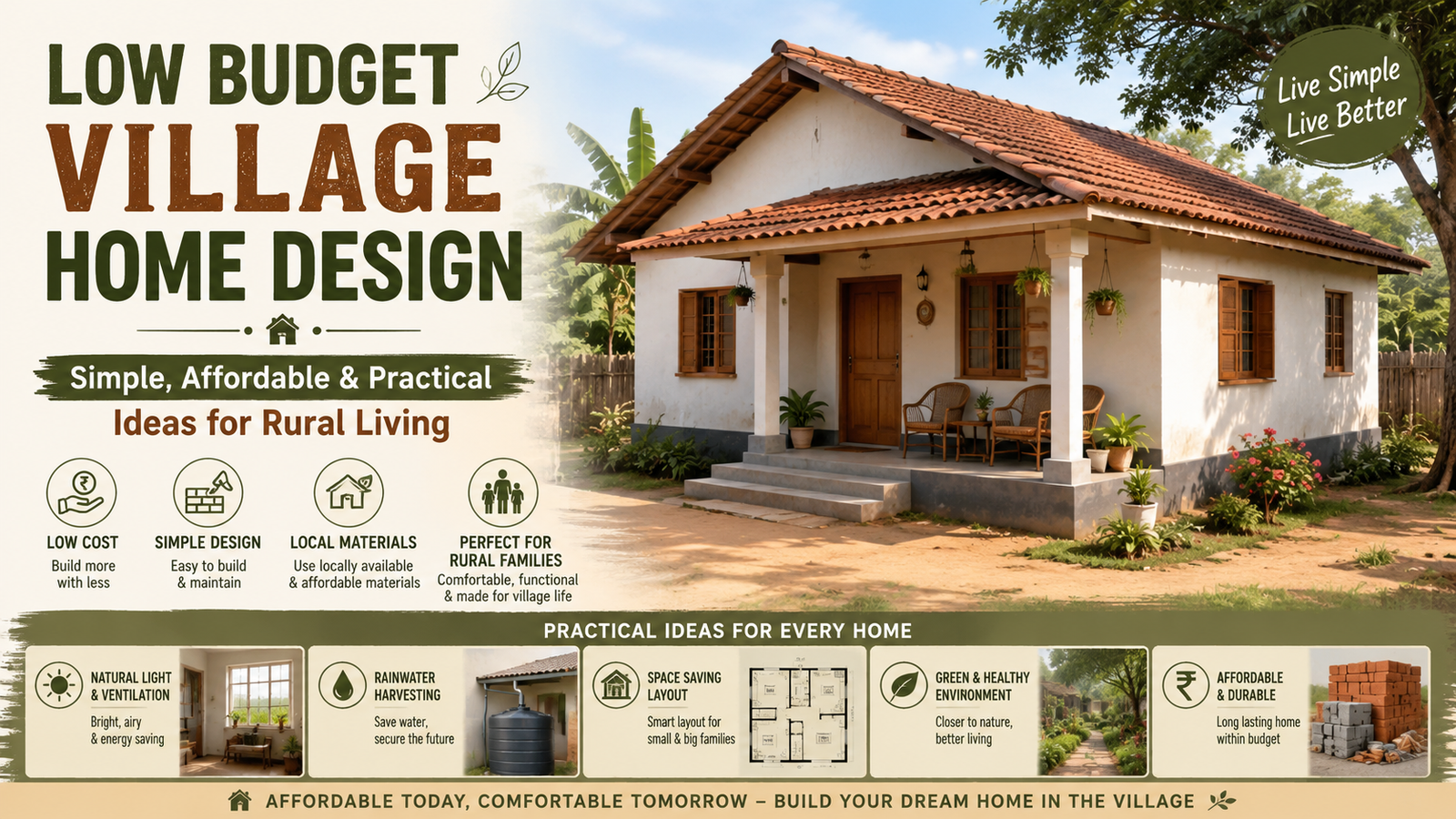
A low budget village home design focuses on creating a comfortable, functional, and durable house using affordable materials and smart planning. In rural areas, homes are often built with cost efficiency, climate suitability, and long-term maintenance in mind. The goal is not luxury, but practicality—maximizing space, using locally available materials, and ensuring good ventilation and natural light. Even on a limited budget, a village home can be beautiful, modern, and long-lasting if designed thoughtfully. This guide explores simple construction ideas, layouts, materials, and cost-saving tips for building a practical rural home.
Key Principles of Low Budget Village Home Design
Before planning, it’s important to understand the core ideas behind affordable rural housing.
Simplicity in structure
Simple square or rectangular layouts reduce construction costs and material waste.
Use of local materials
Locally available bricks, clay, wood, or stone reduce transportation and material expenses.
Natural ventilation and lighting
Large windows and open layouts reduce the need for electricity during the day.
Minimalist construction approach
Avoid unnecessary architectural complexity or expensive decorative elements.
Affordable Layout Ideas for Village Homes
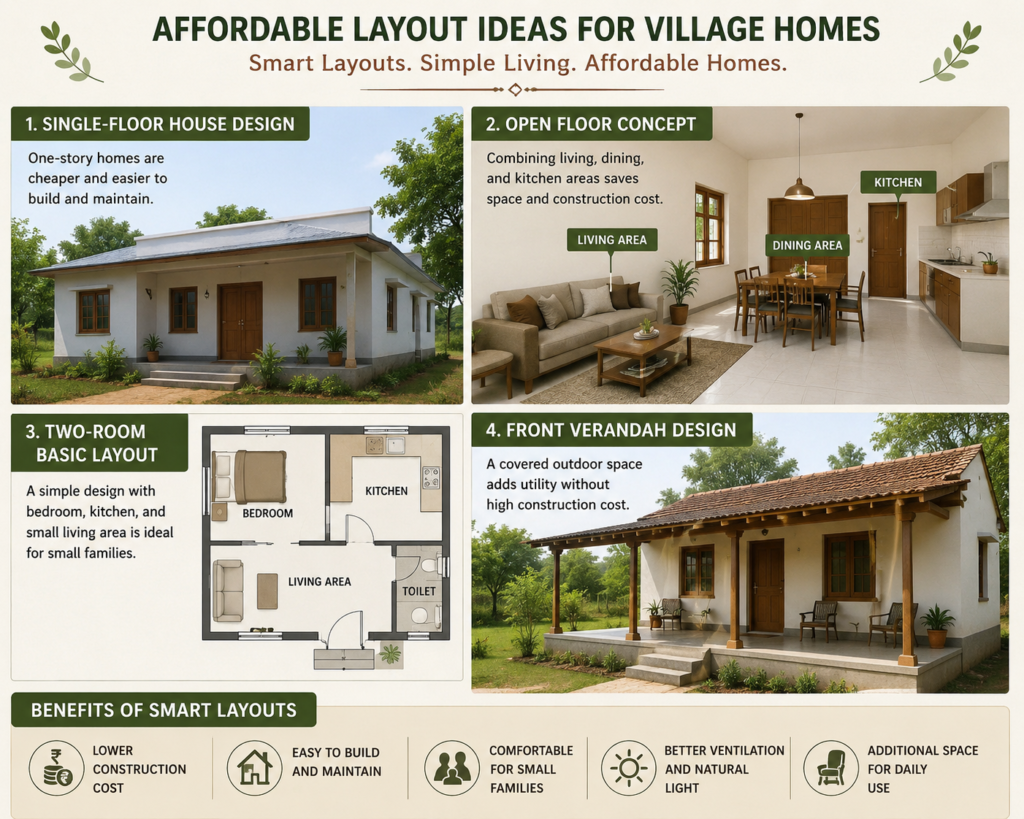
A smart layout reduces costs and improves usability.
Single-floor house design
One-story homes are cheaper and easier to build and maintain.
Open floor concept
Combining living, dining, and kitchen areas saves space and construction cost.
Two-room basic layout
A simple design with bedroom, kitchen, and small living area is ideal for small families.
Front verandah design
A covered outdoor space adds utility without high construction cost.
Budget-Friendly Building Materials
Choosing the right materials is crucial for cost control.
Brick and cement blocks
Strong, affordable, and widely available for rural construction.
Mud and clay walls
Traditional and eco-friendly option for very low budgets.
Bamboo structures
Lightweight, strong, and sustainable material for roofing and walls.
Corrugated metal roofing
Cost-effective and durable roofing solution.
Low Budget Roof Design Ideas
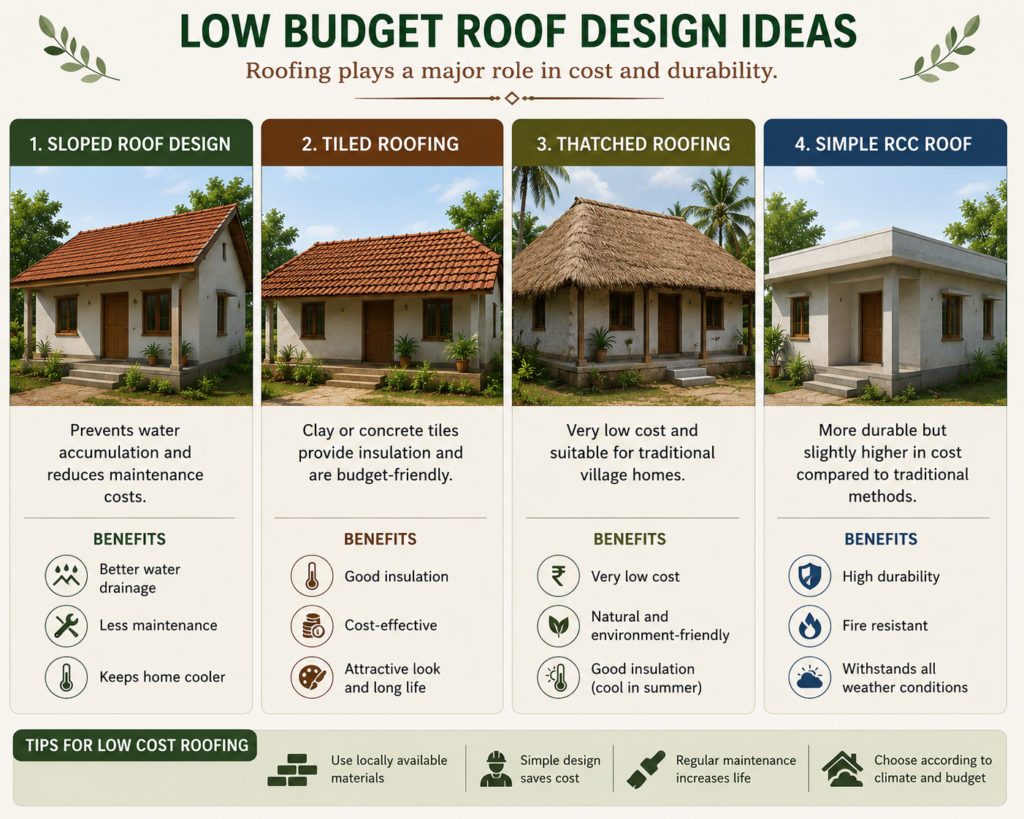
Roofing plays a major role in cost and durability.
Sloped roof design
Prevents water accumulation and reduces maintenance costs.
Tiled roofing
Clay or concrete tiles provide insulation and are budget-friendly.
Thatched roofing
Very low cost and suitable for traditional village homes.
Simple RCC roof
More durable but slightly higher in cost compared to traditional methods.
Simple Interior Design for Village Homes
Interior design should focus on practicality and comfort.
Cement flooring
Affordable, durable, and easy to maintain.
Minimal furniture setup
Use only essential furniture like bed, table, and storage unit.
Whitewashed walls
Keeps interiors bright and clean at low cost.
Open shelving storage
Reduces the need for expensive cabinets.
Low Cost Kitchen Design Ideas
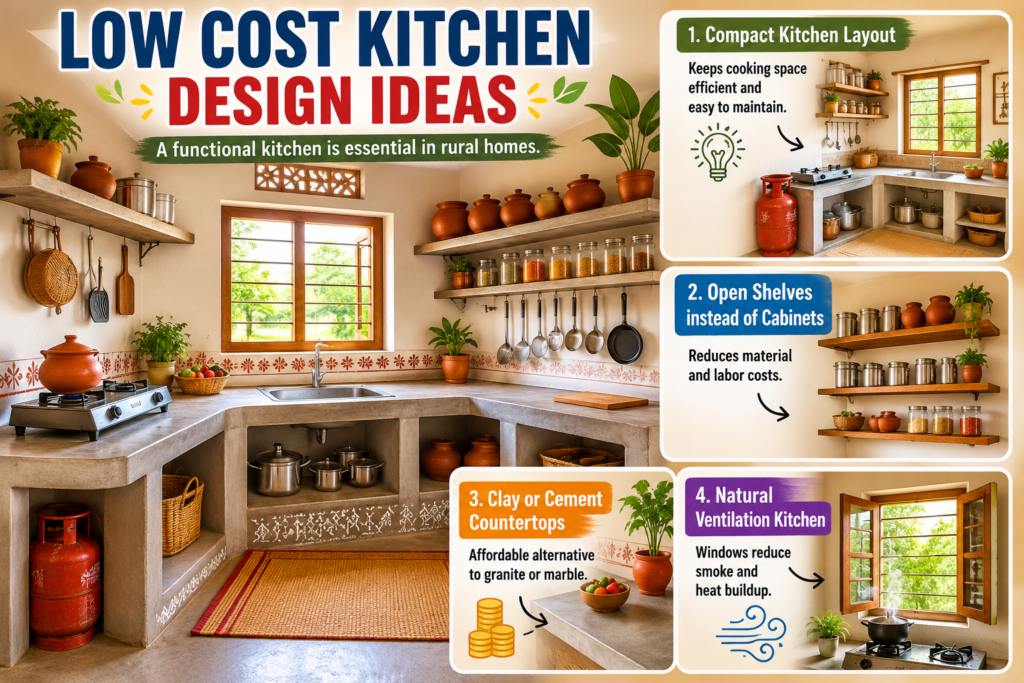
A functional kitchen is essential in rural homes.
Compact kitchen layout
Keeps cooking space efficient and easy to maintain.
Open shelves instead of cabinets
Reduces material and labor costs.
Clay or cement countertops
Affordable alternative to granite or marble.
Natural ventilation kitchen
Windows reduce smoke and heat buildup.
Low Budget Bathroom Design Ideas
Bathrooms can be built simply yet effectively.
Basic tiled flooring
Prevents water damage and improves hygiene.
Brick or cement walls
Strong and cost-effective structure.
Indian-style toilets
More affordable and water-efficient in rural setups.
Simple drainage system
Reduces construction complexity and cost.
Energy-Efficient Village Home Design
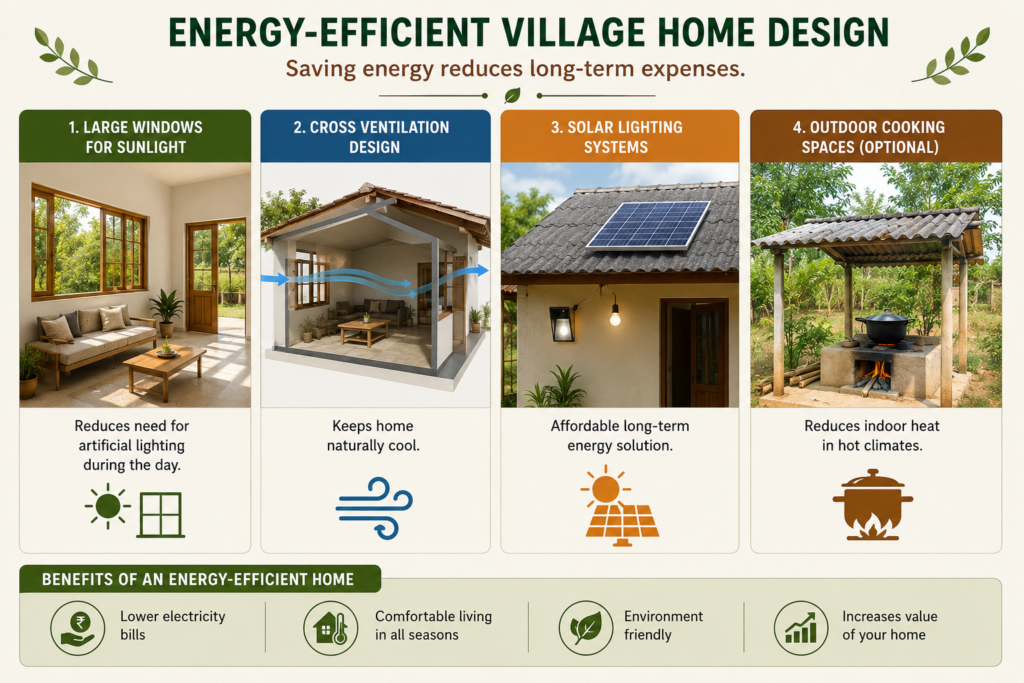
Saving energy reduces long-term expenses.
Large windows for sunlight
Reduces need for artificial lighting during the day.
Cross ventilation design
Keeps home naturally cool.
Solar lighting systems
Affordable long-term energy solution.
Outdoor cooking spaces (optional)
Reduces indoor heat in hot climates.
Outdoor Area Design for Village Homes
Outdoor spaces are important in rural living.
Open courtyard design
Traditional and functional space for family activities.
Small garden area
Grow vegetables or plants for daily use.
Simple boundary fencing
Use bamboo, wire, or low-cost brick walls.
Veranda seating area
A relaxing and social outdoor space.
Cost-Saving Construction Tips
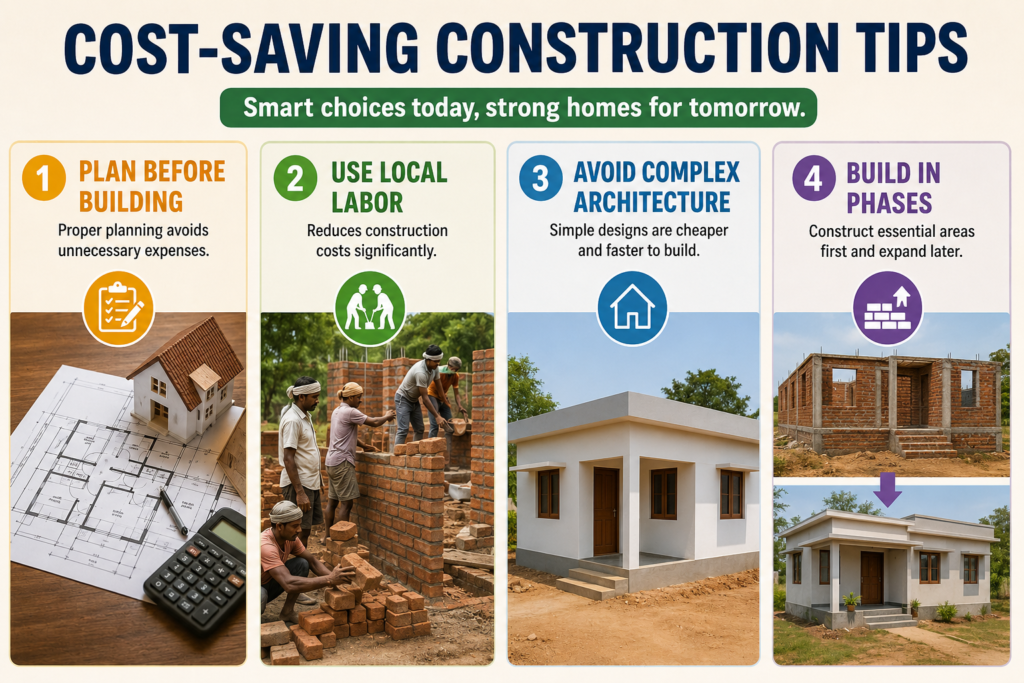
Plan before building
Proper planning avoids unnecessary expenses.
Use local labor
Reduces construction costs significantly.
Avoid complex architecture
Simple designs are cheaper and faster to build.
Build in phases
Construct essential areas first and expand later.
Common Mistakes to Avoid
Overcomplicated designs
Increase cost without real benefit.
Ignoring ventilation
Leads to discomfort and higher energy use.
Poor material selection
Cheap but low-quality materials increase long-term repairs.
Lack of planning
Results in budget overruns and construction delays.
Conclusion
A well-planned low budget village home design can be both practical and beautiful when simplicity and smart choices are prioritized. By using local materials, focusing on basic layouts, and avoiding unnecessary complexity, you can build a comfortable and durable home without overspending. Whether it’s a small single-floor house, a traditional courtyard design, or a modern rural structure, the key is efficiency, functionality, and long-term sustainability. With thoughtful planning, even a modest budget can create a warm and livable village home.
FAQs
What is the cheapest way to build a village home?
Using local materials, simple layouts, and single-floor designs reduces costs significantly.
Which roof is best for a low budget village house?
Sloped or tiled roofs are affordable and durable options.
How can I design a small village home?
Use compact layouts with essential rooms and open spaces.
Are mud houses still good for village homes?
Yes, they are eco-friendly, low-cost, and suitable for rural climates.
How can I reduce construction cost?
Avoid complex designs, use local labor, and plan the project carefully.